
Ecommerce growth: $412K in store revenue
How paid and organic channels worked together to grow an online store's sales month over month.
$412K
Store revenue
+28%
Sales month over month
Anonymised past work by our team. Brand details withheld.
In short
How did an online store reach $412K in revenue?
This ecommerce case study shows an online store reaching $412K in revenue, with sales up 28% month over month. Our team combined Shopping and social ads for new buyers with optimised product and category pages for organic search, and measured both against real store sales.
The challenge
Many online stores rely on one channel. When ad costs rise or rankings dip, sales drop with them and growth becomes unpredictable.
Paid and organic teams often report separately, so no one sees which mix of channels is actually driving revenue.
The goal was to grow total store revenue by making paid ads and organic search work together.
The goal
Grow store revenue from both paid ads and organic search at the same time.
What we did
Step 1
Paid acquisition
Shopping and social ads brought in new buyers for the best selling products.
Step 2
Organic search
Product and category pages were optimised so more sales came from free search traffic.
Step 3
One view of revenue
Paid and organic were measured together against store sales, not separate channel reports.
Results
The store reached $412K in revenue, with sales up 28% month over month from paid and organic combined.
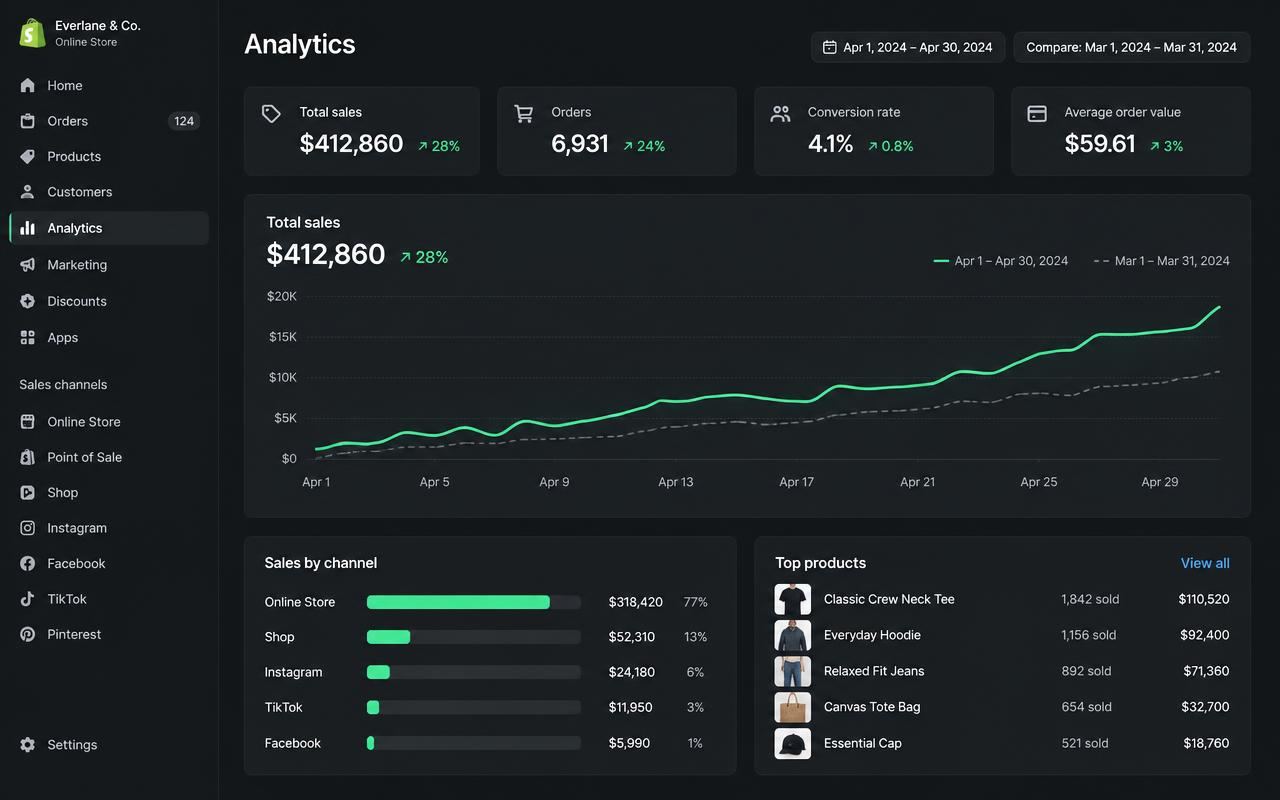
Real dashboard screenshot from the account, anonymised.
- $412K revenue
- Total store revenue shown in the dashboard for the period.
- +28% month over month
- Sales grew more than a quarter compared with the previous month.
Key takeaways
- Use paid ads to reach new buyers for proven best sellers.
- Optimise product and category pages so more sales come from free search traffic.
- Report revenue across channels, not channel by channel.
- Combining paid and organic makes growth steadier.
How to grow ecommerce revenue with paid and organic
- 1
Clean the product feed
Improve product titles, images and attributes for Google Shopping.
- 2
Launch Shopping and social ads
Promote best sellers to new audiences on Google and Meta.
- 3
Optimise category pages
Add helpful copy, FAQs and internal links to rank for buying searches.
- 4
Track revenue in one place
Measure every channel against store sales in Analytics.
- 5
Reinvest in winners
Move budget and content effort to products and channels that grow revenue.
Frequently asked questions
What is the best marketing channel for ecommerce?
Usually a mix: Google Shopping and Meta Ads for fast sales, plus SEO and email for lasting, lower cost revenue.
What does 28% month over month growth mean?
Store sales were 28% higher than the month before during the period shown.
Should ecommerce stores invest in SEO?
Yes. Optimised product and category pages bring buyers without paying for every click, which protects margins.
How do you measure ecommerce marketing?
By revenue, return on ad spend and cost per purchase, tracked against actual store sales.
Can you grow my store the same way?
Results depend on products, margins and market, so we do not promise identical numbers. A free audit shows your best opportunities.
Want results like this?
Learn about our Search and Shopping ads and Ecommerce marketing, or get a free audit of your account.